The Role of Audio Cues in Enhancing Spatial Awareness
31 July 2026
Ever been startled by a gunshot sound behind you while gaming, only to whip your mouse around just in time to spot the enemy? That right there is the power of audio cues. In the world of games, audio isn’t just the background music or gunfire ambiance—it’s your sixth sense. It gives you direction. It tells stories. And more importantly, it sharpens your spatial awareness.
Let's break it down and dive into why audio cues are more than just ear candy. They’re game-changers—literally.
What Exactly Are Audio Cues?
Before we go any further, let’s get clear on what we’re talking about.Audio cues are specific sounds used in games to alert players about actions, events, or locations without needing to see them visually. That could be the distant hum of an approaching vehicle, the rustle of footsteps behind a wall, or the slight "click" of a reloading weapon nearby.
In simple terms, they’re your in-game ears. And if you're playing without listening closely, you're basically playing blindfolded.
Why Audio Cues Matter in Games
Let’s be real: most games today are visual spectacles. Graphics are stunning. Environments feel alive. But great visuals alone won't help you survive in a tense multiplayer match or navigate a dark corridor in a horror game. That’s where audio fills the gap.Audio cues do several crucial things:
- They convey enemies’ positions.
- They indicate danger zones (think grenades, traps, mines).
- They help differentiate between friend and foe.
- They immerse you deeper into the world.
Without sound, you'd be reacting late—or not at all. That’s the fast track to failure in competitive play.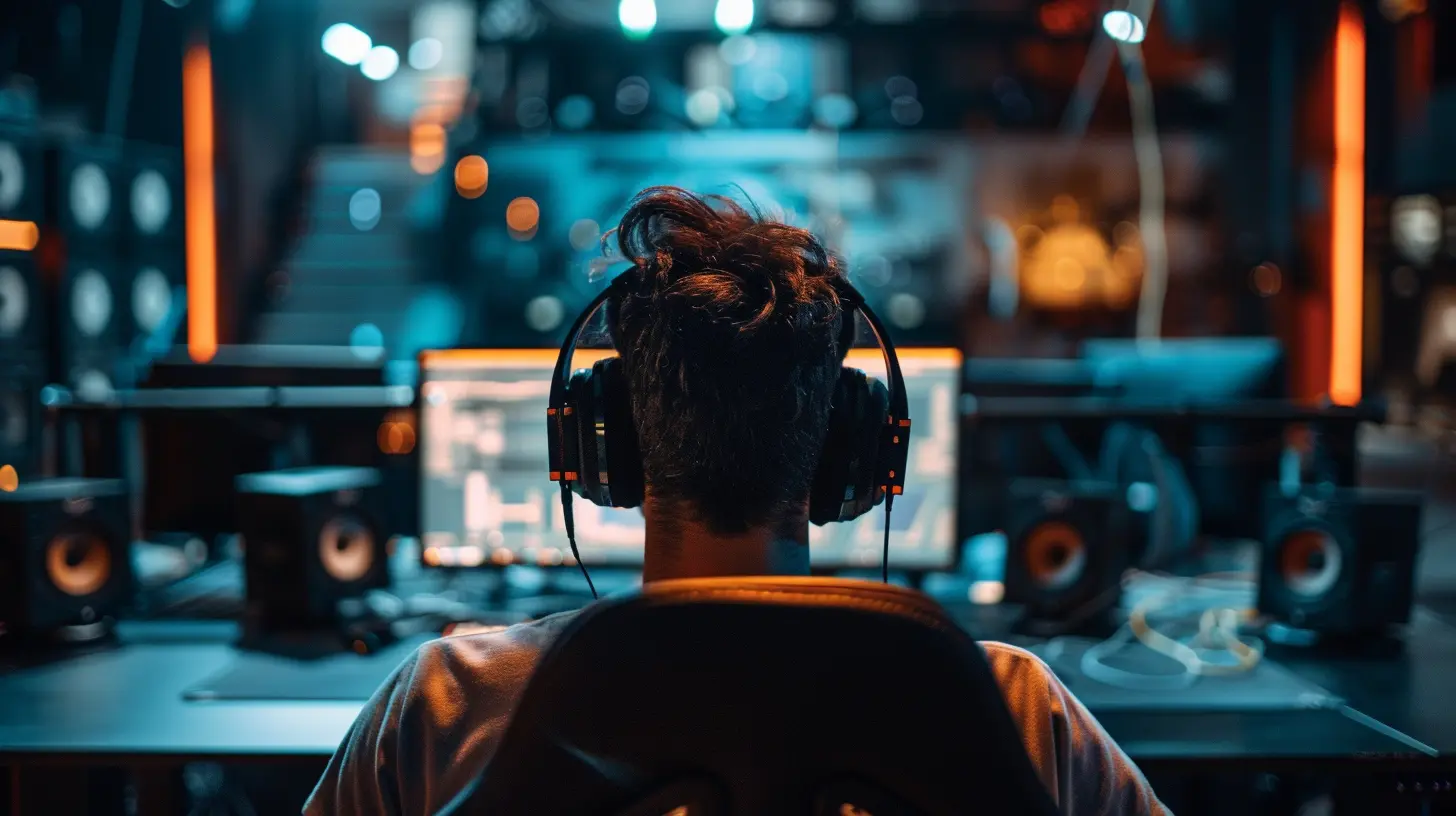
Spatial Awareness: Your Brain’s Internal GPS
So how does this all tie into spatial awareness?Spatial awareness is your ability to understand and interact with the environment around you. In gaming terms, it’s knowing where you are, where others are, and how to move strategically. Think of it as your mental mini-map, constantly updating—without having to look at the actual mini-map every 2 seconds.
Now, your eyes do a lot of that work. But add sound into the mix, and your brain builds a more complete picture. It’s like switching from 2D to 3D.
And the cool part? Your brain is ridiculously good at picking up subtle audio differences—especially when games are designed with audio cues in mind.
The Science Behind It: How Our Brains Process Sound
Here’s a quick science nugget: humans localize sound using two primary techniques:1. Interaural Time Difference (ITD) – The brain compares the arrival time of a sound in both ears.
2. Interaural Level Difference (ILD) – It also compares the loudness of the sound in each ear.
With that info, your brain triangulates the sound’s source, almost like sonar. In gaming, this means when an enemy steps on metal flooring to your left, you instinctively turn that way—even before you visually process it.
Modern audio engines and surround sound systems are engineered to take full advantage of this biological superpower.
Types of Audio Cues Used to Support Spatial Awareness
Let’s dig into the different types of audio cues and how each enhances your situational awareness:1. Directional Sounds
These are sounds that come at you from specific angles—left, right, front, rear, and even above or below. Think footsteps echoing in a stairwell or a helicopter flying overhead.Directional audio helps you:
- Pinpoint enemy locations
- Anticipate movement
- Align your camera or crosshair ahead of time
Games like Call of Duty and Rainbow Six Siege heavily rely on this type of cue. If you can hear it before you see it—you probably live a few seconds longer.
2. Proximity-Based Cues
Volume and clarity can change based on how close a sound source is. The nearer something is, the louder and more detailed it becomes. It works exactly like real life.If you're sneaking through a building in PUBG and hear faint footsteps getting louder—game on.
3. Environmental Echoes and Reverb
Sound behaves differently depending on space. In a tunnel, it echoes. In a tight room, it’s contained and sharp. Developers use reverb and audio filtering to let you “feel” the space without seeing it.This subtle detail can tell you whether an enemy is in a hallway or hiding in an open courtyard.
4. Unique Sound Signatures
Ever notice that different weapons, vehicles, or abilities have their own specific sound? That’s intentional.You don’t just hear footsteps—you hear what kind of footsteps. Heavy boots? Someone’s wearing armor. Light taps? Probably a scout or an unarmored player.
The audio design is rich enough to let you identify and respond even before you see the threat.
How Competitive Gamers Rely on Audio
Professional and high-level gamers treat audio as seriously as their mouse DPI settings. They often:- Use high-end headphones with spatial or surround sound setups
- Train themselves to recognize distinct audio patterns
- Adjust game audio settings to highlight essential cues
- Disable background music to better focus on tactical sound cues
In a high-stakes game like Counter-Strike: Global Offensive, a single footstep can mean the difference between clutching a round or losing it.
And it’s not just shooters.
Even in MOBAs like Dota 2, audio cues signal ability usage or when towers attack. They’re everywhere.
Audio Cues in VR and AR Games
If audio cues are key in 2D games, they’re absolutely vital in virtual reality.In VR, you can’t always look in every direction instantly. Your field of view is limited. Audio practically becomes your main method of navigation and threat detection.
Take a horror VR game for example. Hearing a creak behind you triggers an instinctive fear response. You slowly turn, heart racing. Without that creak? The tension drops. Flat. Like a jump scare that missed its cue.
Spatialized audio in VR isn’t just immersive—it’s functional.
Accessibility and Audio Cues
Audio cues are also a game-changer (pun intended) when it comes to accessibility.For visually impaired gamers, spatial audio allows them to play at a competitive level. Developers are increasingly including:
- Audio ping systems
- Voice cues for objectives
- Distinct sound markers for items and pickups
Games like The Last of Us Part II have set a new bar for accessibility thanks to their enhanced audio cues. Players can navigate entire levels just by listening.
Enhancing Your Own Audio Setup
Now you might be wondering—how can you make the most of audio cues?Here’s a checklist to maximize your sound experience:
- ? Invest in good headphones (preferably closed-back for isolation)
- ? Enable surround sound or spatial audio if available
- ? Adjust EQ settings to emphasize mid and high frequencies (where footsteps and gunfire live)
- ? Lower or mute music in competitive games
- ?️ Practice identifying enemy direction based on sound alone
And don’t forget to regularly check your game’s audio settings. Some developers hide vital options in obscure submenus.
The Future: AI-Driven and Procedurally Generated Sound
Audio in games is evolving fast. We’re talking about:- AI-generated soundscapes that adapt in real time
- Dynamic audio engines that change based on player choices
- Procedural sounds tailored to your gameplay style
Imagine enemies reacting differently based on how much noise you make—or entire missions shifting tone based on the soundtrack’s mood. We’re entering a future where sound isn't just reactive, it's interactive.
Final Thoughts
Let’s face it—audio cues are criminally underrated. They’re not just atmosphere, they’re your tactical edge. Whether you're trying to survive in a horror game, dominate in a shooter, or just explore an open-world title more deeply, listening is just as important as looking.So next time you gear up for a game, put those headphones on, lean in, and really listen. Your ears might just carry you to victory.
all images in this post were generated using AI tools
Category:
Gaming SkillsAuthor:

Kaitlyn Pace
Discussion
rate this article
1 comments
Victor McKinstry
Audio cues transform gaming, sharpening spatial awareness and drawing players deeper into worlds.
August 2, 2026 at 2:36 AM
Kaitlyn Pace
Absolutely! Audio cues create an immersive experience, helping players navigate and connect with the game environment on a deeper level.