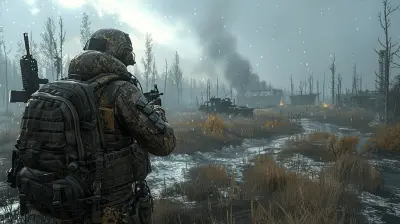
How to Adapt When the Game Changes Mid-Match
28 July 2026
Ever felt like you've got the perfect strategy, your gameplay is on point, and you're cruising toward a win—then boom! The entire vibe of the game flips, and suddenly, nothing works? Yeah, we’ve all been there. Mid-match changes can either make or break you. Whether it’s a sudden shift in your opponent’s strategy, a patch update, your team’s performance, or even unexpected lag, adapting on the fly isn’t just a skill—it’s a necessity.
In this guide, we’re diving deep into how you can stay sharp, think fast, and adapt when the game throws a curveball mid-match. Ready? Let’s break it down.
? Why Mid-Match Adaptation Matters
Let’s get one thing straight: no plan survives first contact with the enemy. It’s an old military saying, but it fits gaming like a tailored glove. You can have all the strategies lined up, but the moment something changes unexpectedly, those plans can crumble.The best players? They’re not just good planners—they’re expert improvisers.
In competitive games—whether it’s a tactical shooter, a high-speed MOBA, or a strategic card battler—adapting is the name of the game. If you can pivot your approach mid-match, rethink your positioning, or change your build, you’re not just playing—you’re evolving.
? Recognizing the Shift
Before you can adapt, you’ve gotta catch the signs. Games don’t usually tap you on the shoulder to say, “Hey, it’s time to switch things up!” You need to be tuned in. Here’s how to spot when the game’s changing:? 1. Your Current Strategy Stops Working
You’re winning lane, crushing objectives, dominating kills, and suddenly... nothing’s working. The enemy’s dodging your combos. They’ve figured you out. That’s your first clue.? 2. Opponents Change Their Tactics
Suddenly the enemy team is grouping mid when they weren’t before. Or maybe they’re camping, pushing harder, or switching loadouts. These are all red flags that the tide is turning.? 3. Your Team’s Losing Coordination
If your squad starts to lose focus, miss timings, or clash over decisions, then it’s time to rethink. You're not just fighting the enemy—you might be fighting internal breakdowns too.
?️ How to Adapt in Real-Time
Alright, so the game’s shifting. Now what? Here’s how you roll with it instead of letting it roll over you.?️ 1. Stay Calm, Breathe, Don’t Panic
Sounds cheesy, but it’s huge. Panicking? That clouds your judgment. Take 10 seconds, assess what changed, and reset your mindset. Even pros need to pause mentally.?️ 2. Read the Situation Like a Map
Start breaking things down:- Who’s carrying the enemy team?
- What's their win condition now?
- Are objectives still worth fighting for?
- Is your early-game advantage slipping?
Use that info to revise your goals. Maybe you stop pushing and start defending. Maybe you sacrifice objectives to farm and regroup.
⚙️ 3. Change Your Loadout or Build
In games that support dynamic builds—like MOBAs or many shooters—switch it up!- Build armor if the enemy assassin's wrecking you.
- Swap to a utility role if your team's losing control.
- Pick support items if survival becomes a priority.
This flexibility can swing games in your favor.
? 4. Communicate with Your Team
You’re not soloing a campaign here. Whether it’s via voice chat or in-game pings, speak up.Say:
?️ “Let’s stop chasing kills and regroup around dragon.”
?️ “They’re jungling together. Let’s ward and play safe.”
You’d be surprised how often teams pull it together once someone calls for a change.
⚡ 5. Adjust Your Playstyle
Are you playing aggressive and dying too much now? Dial it back. Is your team too passive while the enemy snowballs? Maybe it’s time for some risk and aggression.Learn to shift:
- From offense to defense
- From solo to group play
- From leader to support
Flexibility is your superpower.
? Game-Specific Adaptation Tips
Let’s zoom into how this works in different genres. Because, let’s face it, adapting in Fortnite ain’t the same as in Overwatch or League of Legends.?️ In MOBAs (e.g., League of Legends, Dota 2)
- Ward aggressively if the enemy is roaming.- Rotate lanes to counter split-pushers.
- Sacrifice early turrets to protect late-game scaling.
- Rebuild based on what the team needs most—damage, defense, or utility.
? In Tactical Shooters (e.g., Valorant, CS:GO)
- Switch buy strategies if eco rounds aren’t working.- Change positioning to dodge predictable plays.
- Use utility (smokes, flashes) creatively mid-round.
- Try unexpected plays—like rushing mid instead of default setups.
?️ In Battle Royales (e.g., Apex Legends, PUBG, Fortnite)
- Change your rotation path if hotspots become too risky.- Pick different landing zones after rough drops.
- Adapt weapon choices based on loot RNG.
- Recognize which fights to take and which to run from.
?♂️ In Strategy/Card Games (e.g., Hearthstone, MTG Arena)
- Switch to a control mindset if aggressive play isn’t working.- Bait out key cards rather than forcing plays.
- Change tempo—slow down or speed up, depending on opponent dysfunction.
? Mental Resilience: The Secret Weapon
Here’s the thing: adaptability isn’t just mechanics. It’s mental. The difference between good and great players? Mindset.? Build Mental Fortitude
You WILL have bad games. You WILL get outplayed. The key is to treat mistakes like lessons. Instead of tilting and flaming teammates, ask:- What can I do differently?
- What’s the enemy doing that’s smarter right now?
- How can I turn this around?
? Don’t Anchor to Your Plan
Players often fall into “anchoring”—they stick to their original plan even when it’s clearly not working. That’s like driving straight into traffic with your eyes closed because "the GPS said so."Flexibility wins matches.
? Real-Life Examples of Mid-Match Turnarounds
Let’s throw in some real-world gaming references. Moments where players or teams pivoted and shocked everyone.? Faker’s Zed vs. Ryu (League of Legends)
Mid-match, Faker read Ryu’s every move and outdueled him with skill adaptations rather than raw mechanics. He waited, dodged, then went all-in unpredictably.? Sentinels vs. Fnatic (Valorant Masters Reykjavik 2021)
Sentinels adapted mid-series—changing their agent picks, slowing down their economy plays, and reading Fnatic’s patterns. The result? A reverse sweep.? Fortnite Pro Swaps Playstyle Mid-Tournament
Pro players often shift from “W-key” aggression to bush-hiding strategy in late rounds where survival means more points than kills.See the trend? Winners adapt.
? Post-Match: Learn So You Adapt Faster Next Time
Adapting mid-match is tough. But you know what makes it easier next time? Reviewing your games.? Watch Your Replays
Look at the moment things changed mid-match. What triggered the shift? Did you react too late?? Take Notes
Better yet, jot stuff down:- What did the enemy do?
- When did it start?
- What should you have done differently?
Now, you’ve got a playbook for next time.
? Final Thoughts: Stay Fluid, Stay Ahead
Games these days are complex, ever-changing beasts. That’s part of what makes them so fun—and so frustrating. If you want to stay competitive, you’ve gotta be as flexible as the meta, as unpredictable as the enemy, and as aware as an eagle on high alert.Remember: the best players don’t just play the game—they read it, react to it, and rewrite their playstyle on the spot. That’s how you turn a losing match into a highlight reel.
Stay adaptable, stay humble, and keep growing.
all images in this post were generated using AI tools
Category:
Gaming StrategiesAuthor:

Kaitlyn Pace
Discussion
rate this article
1 comments
Reese Simmons
Adapting to sudden changes during a game can be tough. It tests our skills and mindset. Staying calm and focused is key. Embracing the unexpected often leads to creative strategies and new opportunities. It's a reminder that flexibility can turn challenges into victories, both in gaming and in life.
August 5, 2026 at 2:29 AM
Kaitlyn Pace
Absolutely, staying calm and flexible opens up new possibilities. Adapting quickly can really shift the tide in your favor. Embracing change is crucial for success.