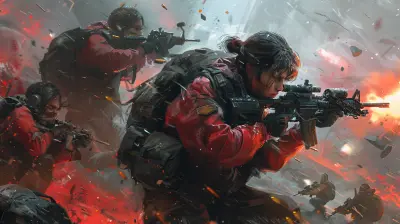
Big Picture Thinking: Long-Term Strategy Over Short-Term Wins
22 April 2026
Let’s be real for a minute—how many times have you chased a quick win in a game, only to realize later that it completely messed up your long-term plan? We've all been there. It’s tempting, right? That juicy power-up, that early level-up, that flashy moment of glory—it’s all too easy to take the bait. But in the long run? It might cost you the game.
Big picture thinking is about zooming out and viewing the entire board, not just the next move. Whether you're strategizing in competitive games, building your empire in a simulation, or just trying to climb the ranks in a battle royale, thinking long-term is what separates the pros from the players who burn out early.
In this article, we’re going to break down what big picture thinking really means in the gaming world, why it matters like crazy, and how you can shift your mindset from chasing short-term wins to playing the long game.
What Is Big Picture Thinking?
Let’s start with the basics. Big picture thinking is the art of seeing and planning for the future, rather than getting caught up in what’s right in front of you.In game terms? It means:
- Planning your build several levels ahead in an RPG.
- Setting up a long-term economy instead of rushing military units in a real-time strategy game.
- Saving that valuable item for a boss fight instead of using it on a random encounter.
- Picking the class or talent tree that’s strong in the late game—even if the early game is tougher.
Big picture thinking is about patience, perspective, and preparation. Think of it like playing chess instead of checkers—you’re not just reacting move by move; you’re thinking five steps ahead.
Why Short-Term Wins Are So Tempting (But Dangerous)
Let’s face it, we live in a world of instant gratification. Games these days often reward us constantly—loot boxes, pop-ups, streak bonuses—it’s like a dopamine buffet. So naturally, we’re wired to take the shiny shortcut whenever it pops up.But here’s the catch: short-term wins can sabotage your long-term success.
That early game over-investment in offense? Might leave you exposed when your enemy counters with defense. That decision to spend all your in-game currency for a quick upgrade? Could mean you’ve got nothing left when a rare item shop pops up.
You’re trading lasting progress for a moment of glory. It's like eating junk food—it feels good now but wrecks you later.
Real-World Gaming Examples
Let’s throw in some real-world analogies from popular games so this really sinks in.? Example 1: Fortnite—Loot or Circle?
Ever had one of those games where you see a shiny chest on the edge of the storm?... and you go for it? That quick loot grab may feel smart, but suddenly you're sprinting to the safe zone with low health and no mobility. Someone who skipped the chest and played smart positioning? They’re now waiting on a hill with a sniper and the high ground advantage.⚒️ Example 2: Civilization Series—War or Tech?
In Civ games, waging war early can result in massive gains… or massive setbacks. Players who spam military units early often fall behind in science and culture. Meanwhile, the long-term strategist who focused on tech ends up launching a spaceship while the warmonger is still trying to conquer their third city.⚔️ Example 3: Clash Royale—Overcommit and Get Punished
In Clash Royale, if you spend all your Elixir on a flashy push, you leave yourself wide open for a counterattack. The smarter player waits, defends smartly, and picks the perfect time to strike back. Boom—tower down.
Why Long-Term Strategy Wins the Game
So why does long-term strategy work? A few reasons:1. Consistency Over Flash
Long-term thinkers play the game of steady growth. One step at a time, they build a solid foundation. No wild swings, no desperation plays, just consistent progress that pays off massively down the line.2. They See the "Why" Behind Every Action
Ever had a game session where you’re just doing random stuff because it “feels right”? Long-term players don’t wing it. They have a reason behind every gear choice, every route, every build. It’s all part of a bigger plan.3. They Adapt, Not Just React
Reacting is what newbies do. Adapting? That’s pro-level mindset. Big picture thinkers aren’t thrown off by surprises—they pivot, adjust, and stay aligned with their master plan.4. They Understand Risk vs Reward
Immediate gains often come with hidden costs. Is that high risk really worth what you gain now? Long-term strategists calculate those odds and take the bet only if it fits their roadmap.Shifting Your Mindset to Big Picture Thinking
Okay, how do you actually do this? How do you train your brain to stop chasing shiny buttons and think long-term?Here’s a few practical tips:
? Ask Yourself: “How Does This Help Me Down the Line?”
Before making any in-game decision, pause and ask: “Does this move support my endgame?” If the answer is no, maybe it’s not the smartest play.? Learn the Meta, But Think Beyond It
The meta (most effective tactics available) changes. What works today might suck tomorrow. Understand trends, but don’t rely on them too hard. Develop your own adaptable strategies that aren't just flavor-of-the-month.? Play for the Endgame
Whether it’s building a late-game-focused deck or leveling up in a way that unlocks future power spikes, shape your entire game plan with the end in mind.? Review Your Losses
Don’t just rage-quit when you lose. Look back. Where did your short-term decisions hurt you? Could saving that potion, skipping that early fight, or farming a little longer have changed the outcome?Mindset Differences: Short-Term vs Long-Term Players
| Trait | Short-Term Thinker | Long-Term Strategist ||------|---------------------|----------------------|
| Decision-making | Impulsive | Calculated |
| Strategy | Reaction-based | Goal-oriented |
| Focus | Immediate gains | Sustainable growth |
| Risk approach | High-risk, high-reward | Low-risk, high-yield |
| Adaptability | Panics when the plan breaks | Re-routes but stays on goal |
How Big Picture Thinking Impacts Multiplayer Games
In multiplayer games, long-term strategy isn’t just smart—it’s deadly. Why? Because other players don’t expect it.They’re often so focused on winning this fight that they don't notice you’ve been farming, building, and scaling intentionally. Then, 20 minutes later, you roll over them like a tank with a spreadsheet.
League of Legends is a fantastic example. A player who gives up a few early kills (instead of going all-in) to focus on CS (creep score), map control, and vision will often end up being the true carry in the late game. While the hotshot who got early kills tapers off.
The Patience Game: It’s Not Flashy, But It Works
Real talk: big picture thinking isn’t sexy. You won’t always get the sick highlight play or the clutch moment that goes viral. But you will win more games.Sometimes the best plays are the ones no one sees—the decision not to take a fight, the choice to farm instead of roam, the slow accumulation of gold and power that ends up overwhelming your enemies.
It’s not glamorous. But it works. Consistently.
The Psychology Behind It All
Why is it so hard to stay focused on the long game?- Short-term rewards trigger dopamine. They feel good.
- Loss aversion makes us panic. We’d rather take any win than risk a big loss.
- Ego wants to look good now. Who wants to look weak for the first 10 minutes?
But success in most games, like success in life, comes from delaying gratification. From building something that lasts.
Final Thoughts: Think Macro, Win Micro
At the end of the day, games are about enjoyment, sure. But if you’re aiming to improve, climb, or dominate, you have to think bigger. Don't just play the game in front of you—play the game 20 steps from now.Let everyone else chase the quick win. You? You’re building something bigger. Something smarter.
Big picture thinking isn’t just a mindset—it’s a superpower.
So next time you log into your favorite game, ask yourself: “Am I chasing crumbs, or am I baking the whole damn cake?
all images in this post were generated using AI tools
Category:
Gaming StrategiesAuthor:

Kaitlyn Pace
Discussion
rate this article
2 comments
Maria Romero
Great read! It's so true that focusing on long-term strategy can lead to more fulfilling gaming experiences. Short-term wins are fun, but they often leave us wanting more. Embracing the big picture helps us appreciate the journey and growth. Can't wait to see how these insights shape future games!
April 23, 2026 at 3:54 PM
Kaitlyn Pace
Thanks for the feedback! I'm glad you resonate with the importance of long-term strategies in gaming. It's all about the journey and growth, isn't it? Excited to explore where this thinking takes us!
Jolene Moses
Embracing big picture thinking cultivates resilience and meaningful growth, reminding us that lasting success often requires patience and a strategic vision.
April 22, 2026 at 4:19 AM
Kaitlyn Pace
Absolutely. Focusing on the big picture helps us navigate challenges and fosters growth that stands the test of time. Patience and clear vision are key.